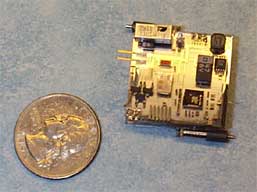
At 1/4 cubic inch and weighing less than an ounce, it is possibly the smallest autonomous untethered robot ever created. Powered by three watch batteries, it rides on track wheels and consists of an 8K ROM processor, temperature sensor, and two motors that drive the wheels. Enhancements being considered include a miniature camera, microphone, communication device, and chemical micro-sensor.
“This could be the robot of the future,” says Ed Heller, one of the project’s researchers. “It may eventually be capable of performing difficult tasks that are done with much larger robots today — such as locating and disabling land mines or detecting chemical and biological weapons.” He says it could, for example, scramble through pipes or prowl around buildings looking for chemical plumes or human movement.
The robots may be capable of relaying information to a manned station and communicating with each other. They will be able to work together in swarms, like insects.
The miniature robots will be able to go into locations too small for their larger relatives. The mini-robot has already maneuvered its way through a field of dimes and nickels and travels at about 20 inches a minute. It can sit easily on a nickel. The newest robot miniaturization research supports Laboratories Directed Research and Development (LDRD) work started in Sandia’s Intelligent Systems Sensors & Controls Department. In 1996 the department unveiled a Mini Autonomous Robot Vehicle (MARV), a one-cubic-inch robot that contained all the necessary power, sensors, computers, and controls on board. It was made primarily from commercial parts using conventional machining techniques.